Blackjack remains one of the most iconic card games in any casino, mixing simple rules with a layer of strategic depth that rewards thoughtful play. Unlike pure chance games, every decision at the blackjack table impacts the outcome, which explains its enduring appeal among players who enjoy an analytical challenge. The core objective remains elegantly straightforward: build a hand value closer to 21 than the dealer’s without exceeding that total. This guide covers the essential rules, strategic principles, and practical considerations for playing blackjack at an online platform like Yako Casino. Understanding the fundamentals transforms the experience from casual entertainment into a more engaging pursuit where informed choices genuinely matter. The following sections outline everything needed to approach the virtual felt with confidence.
Learning the Core Rules and Card Values
The foundation of blackjack rests on a well-defined system of card values and a predetermined sequence of play. Numbered cards from two through ten hold their face value, while face cards—jacks, queens, and kings—each are worth ten. An ace holds a adjustable value of either one or eleven, according to which total improves the hand more. A hand holding an ace valued at eleven is known as a soft hand because it won’t bust with a single additional card. The dealer distributes two cards to each player and two to themselves, typically with one dealer card revealed as the upcard. This face-up card becomes the key piece of information directing every later player decision. The game proceeds clockwise around the table, with each player playing out their hand before the dealer turns over their hole card and plays according to fixed house rules.

The dealer plays under rigid constraints that remove any aspect of choice from their side of the table. Most often, the dealer must hit additional cards on any total of 16 or less and must stay on all totals of 17 or higher. Some variations mandate the dealer to hit on a soft 17, a rule that slightly raises the house edge and should be noted before joining at any table. Players win instantly if their initial two cards add up to 21, a natural blackjack, which typically pays 3 to 2. If both the player and dealer have a natural, the hand ends in a push and the starting wager returns. Understanding these basic mechanics builds the necessary groundwork before exploring the strategic options offered during play.
Handling Your Bankroll at the Blackjack Table
Effective bankroll management transforms blackjack from a sequence of disconnected bets into a manageable recreational activity with specific boundaries. The primary principle requires determining a session budget that constitutes an amount the player is fully comfortable losing, completely separate from funds needed for daily expenses. This established limit should not ever be exceeded in the thick of the moment, irrespective of whether the session is running well or poorly. A sensible approach divides the session bankroll into individual betting units, with each unit representing the standard wager for a solitary hand. Most experienced players advise having at least thirty to forty units accessible per session to handle the natural variance that occurs even when employing perfect strategy. This safety net prevents a short run of bad luck from terminating the session prematurely.
Bet sizing should keep consistent rather than oscillating wildly in response to recent outcomes, as blackjack hands are separate events with no memory of previous results. Chasing losses by raising bet sizes after a losing streak embodies one of the fastest paths to draining a bankroll, since the mathematical probability of each hand remains unchanged regardless of what came before. Some players embrace a conservative positive progression, slightly increasing bets after wins while maintaining a firm floor on the minimum wager. Establishing a win goal alongside a loss limit forms a balanced framework, such as concluding the session when ahead by fifty percent of the starting bankroll or when the loss limit is reached. Online platforms like Yako Casino provide responsible gaming tools, including deposit limits and session reminders, that facilitate disciplined bankroll management without demanding constant willpower.
Engaging in Blackjack on Mobile Devices
The shift toward mobile gaming has transformed how Canadian players access blackjack, with smartphones and tablets now supporting the full range of variants previously restricted to desktop computers. Modern online platforms including Yako Casino offer blackjack through browser-based technology that needs no dedicated application download, adjusting the interface automatically to different screen sizes and orientations. The touch interface alters the physical experience of play, swapping mouse clicks with taps and swipes that feel more natural. Game developers have refined button placement and sizing to prevent misclicks, a crucial consideration when real money decisions must be made quickly and accurately. The portrait orientation typically stacks the player’s hand, the dealer’s hand, and the action buttons in a vertical column that suits one-handed play, while landscape mode arranges the layout horizontally for a wider view.
Mobile blackjack preserves all the strategic depth of its desktop counterpart, with access to the same rule sets, betting limits, and decision options. The smaller screen does not reduce the availability of information, as game interfaces clearly present the dealer’s upcard, the player’s total, and the available actions at every stage. Players who use basic strategy charts can either memorize the most common decisions or keep a reference image saved on their device for quick consultation between hands. The portability of mobile play introduces new considerations for session management, as the ease of accessing a blackjack table from anywhere can blur the boundaries of planned playing time. Setting a timer or enabling session limit notifications directly through the casino platform aids maintain the same disciplined approach that works at a desktop setup. The quality of the mobile experience now competes with and sometimes exceeds traditional formats, with crisp graphics and smooth animations that make the virtual felt genuinely engaging.
Discovering Well-known Blackjack Variants
Traditional Blackjack
Traditional blackjack observes the standard format that the majority of players first encounter, commonly using six or eight regular decks shuffled together. The dealer stays on all seventeens, and original blackjacks offer the full 3 to 2 ratio that constitutes the highly player-friendly standard. Separating is permitted on any pair, and doubling down is permitted on any two starting cards, though rules on splitting and doubling vary between versions. The uncomplicated nature of traditional blackjack renders it an ideal starting point for learning the game, as it features no atypical side bets or rule adjustments that complicate the tactical landscape. The house edge under these standard conditions is about 0.5 percent when the player follows basic strategy precisely, turning it into one of the most attractive offerings in the casino.
European-style Blackjack
European-style blackjack presents a substantial format difference that modifies the strategy: the dealer receives only one card initially and does not draw a hole card until all players finish their hands. This rule, called European no-hole-card, indicates that players incur sacrificing additional money from doubles and splits if the dealer later uncovers a natural blackjack. The consequence is a slightly higher house edge versus the American style where the dealer checks for blackjack instantly. Players need to modify their strategy by remaining more restrained with doubling and splitting against dealer aces and tens, as the danger of losing multiple bets to a dealer natural rises. European blackjack remains broadly available at online casinos catering to Canadian players and delivers a distinct rhythm that many veteran players value.
Premium and Real-time Dealer Options
Premium blackjack tables frequently feature elegant visual presentations and rule tweaks that appeal to players pursuing a more upscale experience or slightly better odds. These may encompass options like surrender, which permits a player to forfeit half their wager and abandon a losing hand before receiving additional cards. Live dealer blackjack bridges the gap between online accessibility and the social ambiance of a physical casino, broadcasting a real dealer from a professional studio directly to the player’s device. The dealer hands out physical cards on a real table, and players execute decisions through a digital interface that transmits their choices instantly. Live games usually run at a slower pace than their fully digital alternatives, giving players more time to evaluate each decision and reference their strategy charts. The chat function introduces a social element, www150.statcan.gc.ca allowing interaction with the dealer and from time to time with other players at the table.
Learning the Core Playing Decisions
Any hand of blackjack presents a branching decision tree where the player must judge their own total against the dealer’s visible upcard. The four primary actions accessible are hitting, Yako Casino mobile version, standing, doubling down, and splitting pairs. Hitting means taking an additional card, which can be done repeatedly until the player either opts to hold or busts by exceeding 21. Standing signals agreement with the current hand total, passing the action to the next player or to the dealer. The decision between hitting and standing forms the backbone of basic strategy, and it depends entirely on the mathematical relationship between the player’s hand and the dealer’s exposed card. A dealer showing a six, for example, is in a weak position prone to busting, which changes how aggressively a player should seek additional cards.
Doubling down allows a player to double their initial wager in exchange for receiving exactly one additional card, after which the hand automatically stands. This option becomes beneficial when the player holds a strong starting total against a vulnerable dealer upcard, such as a total of eleven facing a dealer’s six. Splitting pairs becomes an option when the first two cards share the same rank, allowing the player to separate them into two independent hands, each with its own wager equal to the original bet. The player then plays each hand sequentially, drawing cards and making decisions as normal. Certain rules govern whether additional splits or doubling after splits are permitted, and these table-specific variations meaningfully affect the optimal strategy. Knowing when to apply each of these options separates methodical players from those relying on intuition alone.
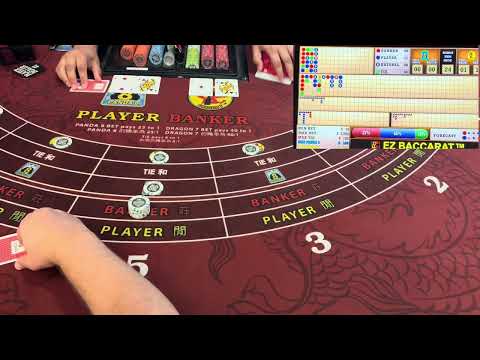
Comprehending House Edge and Return to Player
The house edge in blackjack is not a static number but a variable that changes based on the particular rules in effect and the accuracy of the player’s decisions. Under usual rules with 3 to 2 blackjack payments, dealer standing on soft seventeen, and the ability to double on any two cards, the house edge stands around 0.5 percent against a basic strategy player. This value indicates that over a large sample of hands, the casino aims to retain approximately fifty cents for every hundred dollars staked. Rule changes that look minor can markedly affect this percentage. A table that pays 6 to 5 on blackjacks instead of 3 to 2 adds roughly 1.4 percent to the house edge, turning it a substantially worse option for players. The number of decks in play also is important, with fewer decks generally reducing the house edge, though the influence is smaller than many players assume.
Return to player, often shortened as RTP, conveys the same concept from the opposite viewpoint, representing the percentage of total wagers that theoretically is paid to players over time. A game with a 0.5 percent house edge carries an RTP of 99.5 percent, putting blackjack among the most advantageous casino games when played properly. This measures favourably to most slot machines, which typically present RTPs in the 94 to 97 percent range, and to roulette, where the house edge on a single-zero wheel sits at 2.7 percent. The critical warning is that achieving the theoretical RTP requires perfect dedication to basic strategy on every single hand. Divergences from optimal play, even seemingly small ones like holding on sixteen against a dealer seven, raise the house edge cumulatively. Players serious about maximizing their return should consider basic strategy not as optional advice but as the non-negotiable basis of the game.
Typical Blunders and Ways to Prevent Them
Players who understand the core rules often make predictable traps that pointlessly raise the house edge. One of the most common mistakes concerns buying insurance when the dealer reveals an ace. Insurance is a side bet that pays 2 to 1 if the dealer holds a natural blackjack, but the actual odds of the dealer possessing a ten-value card are roughly 2.25 to 1 against. This discrepancy creates a house edge on the insurance bet alone that exceeds 7 percent, turning it into a mathematically poor proposition regardless of the player’s hand strength. If a player does not is counting cards with a high degree of accuracy, which is practically impossible in online games with continuous shuffling, insurance should be declined in every situation. The bet is designed to feel protective but functions as a major long-term drain on the bankroll.
Another common error involves misinterpreting soft hands and handling them too conservatively. A soft seventeen, for instance, should nearly always be hit rather than stood upon, because the flexible ace means the hand cannot bust with a single card. Many players hold on soft eighteen against a dealer’s nine, ten, or ace, when basic strategy actually suggests hitting in these scenarios to increase the chance of enhancing to a winning total. The fear of busting is common in recreational play, but the mathematics clearly shows that passive play against strong dealer upcards costs more money than the occasional bust. Splitting decisions also generate frequent mistakes, particularly the reluctance to split nines against a dealer nine, or the hesitation to split eights against a ten. These splits feel counterintuitive because they raise the amount at risk in a difficult situation, but they reduce the expected loss compared to playing the pair as a single hand.
The Significance of Basic Strategy
Fundamental strategy represents a mathematically derived set of rules that prescribes the best playing decision for all possible combinations of player hand and dealer upcard. Formulated through computational simulations studying millions of hands, this framework reduces the house edge to its mathematical minimum, often under one percent in advantageous rule sets. The strategy is presented of a colour-coded chart that players can consult while playing online, negating the need for memorization in a virtual environment. Each cell in the chart corresponds to a given scenario, suggesting whether to hit, stand, double, or split based entirely on the probabilities involved. Using basic strategy cannot guarantee success in any given session, but it guarantees that no costly mistakes erode the player’s projected return over time.
The logic behind basic strategy uncovers interesting patterns that help players internalize its recommendations. When the dealer displays a bust card—two through six—the player’s main objective shifts to steering clear of needless risk, since the dealer will frequently exceed 21 without player involvement. This implies standing on lower totals like twelve or thirteen that would normally feel uncomfortable. On the other hand, when the dealer shows a high upcard like a ten or ace, the player must take more aggressive action, drawing on hands up to sixteen and even seventeen in some soft-hand scenarios. The strategy also explains common points of confusion, such as invariably splitting aces and eights while refraining from splitting tens or fives. Online play at Yako Casino permits players to keep a strategy chart open in another tab, ensuring perfect play attainable to everyone regardless of experience level.
Rewards and Incentives for Blackjack Players
Online casinos organize their promotional offers around specific game categories, and blackjack players should carefully examine the terms before claiming any bonus. Welcome offers commonly consist of a deposit match, where the casino adds bonus funds equal to a percentage of the player’s initial deposit up to a stated maximum. However, wagering requirements specify how many times the bonus amount must be played through before any winnings can be withdrawn, and blackjack typically counts at a lower rate than slots. A common structure stipulates thirty-five times wagering, with blackjack contributing only ten or twenty percent toward that requirement. This reduced contribution reflects the lower house edge of blackjack, which makes it harder for the casino to ensure the bonus funds are cycled sufficiently. Players who intend to focus primarily on blackjack should calculate the effective wagering requirement after accounting for the contribution rate to determine whether the offer holds genuine value.
Beyond the welcome package, ongoing promotions may include cashback on net losses, reload bonuses on subsequent deposits, or tournament-style competitions with prize pools. Cashback offers tend to be more straightforward for blackjack players, as they return a percentage of losses over a defined period without complex wagering requirements attached to the rebated funds. Some platforms run blackjack-specific leaderboards where players earn points based on consecutive wins or the size of their wagers, adding a competitive element to standard play. Reading the full terms and conditions for any promotion remains crucial, with particular attention to maximum bet limits while a bonus is active, restricted games, and expiration dates. Yako Casino displays these details transparently, allowing players to make informed decisions about which offers align with their preferred playing style and game selection.
Integrity, Impartiality, and Responsible Play
The reliability of online blackjack depends on two cornerstones: the random number generator that determines card distribution and the regulatory framework that monitors the casino’s operations. Reputable platforms present their random number generators to independent testing laboratories that validate the statistical randomness of output over millions of simulated hands. These audits demonstrate that cards are distributed without pattern or predictability, assuring that every hand offers the same mathematical probabilities as a physical deck. Licensing authorities require additional requirements, including the segregation of player funds from operational accounts and the implementation of anti-money laundering protocols. Canadian players utilizing internationally licensed casinos should verify that the operator holds credentials from recognized jurisdictions such as Malta, Gibraltar, or Kahnawake, as these regulators uphold meaningful enforcement powers and dispute resolution mechanisms.
Responsible gaming features constitute an integral part of the security infrastructure, delivering tools that assist players maintain control over their gambling activity. Deposit limits can be established on a daily, weekly, or monthly basis, curbing impulsive decisions to exceed predetermined budgets. Reality check notifications pop up at configurable intervals, presenting the duration of the current session and the net result so far. Self-exclusion options permit players to block access to their account for a specified period ranging from days to permanently, with the casino obligated to honour these restrictions once activated. The existence of these tools indicates a broader industry shift toward sustainable entertainment rather than maximizing short-term revenue. Players who approach blackjack as a recreational activity supported by these protective measures are far more likely to enjoy the experience without encountering the negative consequences that can result from unmanaged gambling. The analytical nature of blackjack strategy itself encourages a measured, thoughtful approach that corresponds naturally with responsible play principles.